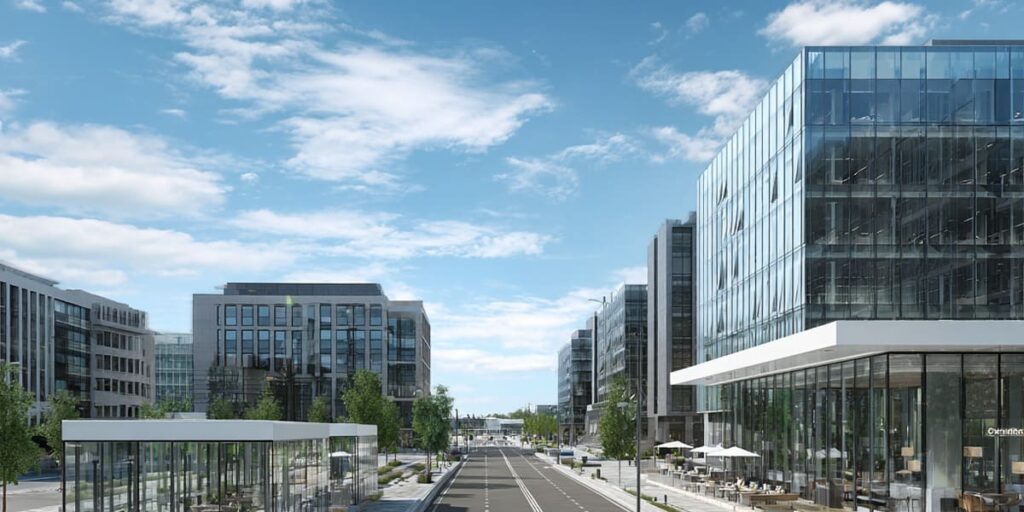
Urban growth often follows infrastructure. Transport corridors, mobility upgrades, and large-scale planning initiatives tend to determine how cities expand and where real estate activity concentrates. In Hyderabad, several public investments underway are expected to influence residential demand and development patterns in 2026. From metro expansion and road upgrades to riverfront redevelopment and new urban districts, these initiatives are gradually reshaping the city’s growth corridors. The evolving landscape of Hyderabad infrastructure provides a clear indicator of where the next phase of the property market is likely to take shape.
Metro Expansion and Transit Connectivity
One of the most closely watched developments is the Phase II expansion of the Hyderabad Metro, which will significantly expand the city’s rapid transit network. The proposed expansion spans roughly 76.4 kilometres across five corridors, including routes such as Nagole to Shamshabad Airport, Raidurg to Kokapet Neopolis, Miyapur to Patancheru, MGBS to Chandrayangutta, and LB Nagar to Hayat Nagar. Authorities have also indicated that an additional corridor connecting the airport to the upcoming Fourth City or Skill University is under consideration.
Metro connectivity tends to influence housing demand by improving accessibility between residential districts and employment centres. In Hyderabad, this is particularly relevant for corridors linking the western technology belt with emerging residential clusters. The proposed Raidurg–Kokapet Neopolis line, for example, strengthens access between an established office hub and one of the city’s fastest-growing premium residential zones.
Road Infrastructure and Urban Mobility Projects
Road connectivity remains equally important in a rapidly expanding city. As part of its mobility strategy, the Telangana government has initiated the H-CITI programme. The first phase includes 31 flyovers, 17 underpasses, and 10 road expansion projects with a combined investment of approximately ₹7,032 crore.
These upgrades are aimed at reducing congestion at key junctions and improving traffic flow across the city. Improved mobility strengthens accessibility between residential neighbourhoods and commercial districts. Such Hyderabad infrastructure projects often influence the attractiveness of several micro-markets by reducing travel friction within the urban core.
Flood Management and Civic Infrastructure
Civic infrastructure upgrades are also gaining attention as Hyderabad continues to expand. Flood resilience and drainage management have become important priorities in recent years. The government has allocated approximately ₹5,942 crore for an Integrated Stormwater Drainage Project designed to strengthen the city’s flood management systems.
Alongside this initiative, large-scale sewer maintenance programmes have been implemented across the city, including the cleaning of thousands of kilometres of sewer lines and extensive desilting of manholes. Improvements in civic infrastructure contribute to better urban liveability and long-term residential stability.
Musi Riverfront Redevelopment
The Musi Riverfront redevelopment programme represents another major urban initiative. The government has proposed the development of nearly 55 kilometres of the river stretch within Hyderabad. The plan includes environmental restoration, recreational spaces, tourism infrastructure, and new public amenities.
Riverfront projects in many global cities have influenced surrounding real estate markets by improving environmental conditions and enhancing public spaces. In Hyderabad, the Musi project has the potential to strengthen the appeal of central and eastern neighbourhoods while contributing to a broader urban renewal effort.
Future City and Airport-Led Growth
Large-scale planning initiatives in southern Hyderabad are also expected to influence the city’s development trajectory. The proposed Future City project covers nearly 765 square kilometres and has been envisioned as a net-zero urban development focused on sustainability, advanced technology industries, and integrated mobility systems. Initial funding has been allocated for master planning, with proposed zones including AI-driven technology clusters and clean-energy innovation districts.
At the same time, Rajiv Gandhi International Airport continues to expand its economic influence. Annual passenger traffic has crossed 30 million, and additional terminal capacity is under consideration to accommodate future growth. Airport-linked economic activity has already created a substantial employment base in the surrounding region.
These initiatives form part of a broader group of Hyderabad development projects that are gradually expanding the city’s growth geography toward the southern corridor.
Implications for the Property Market
Infrastructure investment often precedes real estate expansion, and the projects currently underway are expected to reinforce Hyderabad’s real estate growth over the coming years. Improved transit connectivity, enhanced road networks, and new urban districts are collectively expanding the city’s development footprint.
For the property market, the implications are clear. Locations aligned with transport corridors, employment hubs, and large-scale planning initiatives are likely to see stronger residential activity and continued investor attention as the city evolves.
FAQs
1. Which infrastructure project is expected to influence Hyderabad real estate the most in 2026?
Metro expansion under Hyderabad Metro Phase 2 is expected to be one of the most influential projects, along with road infrastructure upgrades and the Future City initiative.
2. Why does metro connectivity influence property demand?
Metro connectivity improves accessibility between residential areas and employment hubs, which often increases buyer interest and long-term property value.
3. What role do road infrastructure projects play in real estate growth?
Flyovers, underpasses, and widened roads reduce congestion and improve travel efficiency, which strengthens the attractiveness of residential locations.
4. How could the Musi Riverfront redevelopment affect nearby areas?
Riverfront development can enhance public spaces, improve environmental conditions, and increase the overall appeal of surrounding neighbourhoods.
5. Will South Hyderabad see more development in the coming years?
Yes. Initiatives such as Future City planning, airport expansion, and improved connectivity are expected to support increased development activity in southern corridors.